Blog
Skid Steer vs. Compact Track Loader: Which Machine Fits the Job?
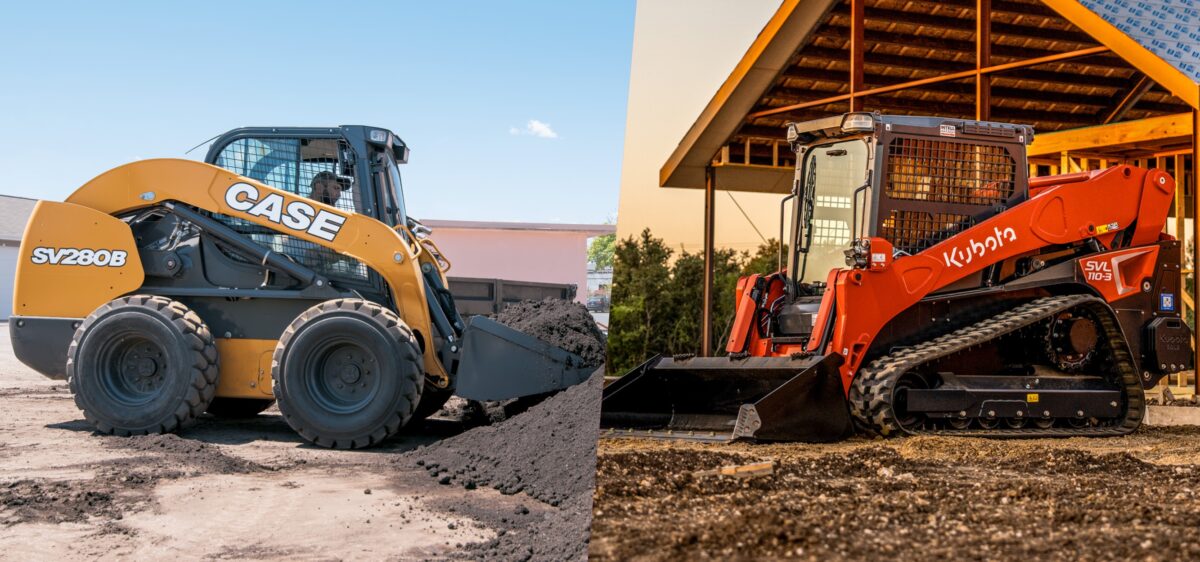
July 23, 2026At Eagle Power & Equipment, Inc., we get asked this question more than almost any other when contractors and landscape crews are outfitting a fleet: should you run a skid steer or a compact track loader? The answer comes down to one core difference- skid steers run on wheels, compact track loaders run on rubber tracks, and that single difference changes how each machine handles traction, ground pressure, stability, and the type of ground it’s built for.
We carry both machine types across our CASE and Kubota lineups, and we work with crews across the Delaware Valley every week who run one, the other, or both depending on the job. Here’s how we walk customers through the decision.
What’s the actual difference between a skid steer and a compact track loader?
A skid steer uses four wheels and skid-steering to turn, while a compact track loader replaces those wheels with a continuous rubber track on each side. The track loader spreads the machine’s weight over a much larger surface area, which lowers ground pressure and improves flotation on soft or uneven terrain.
This is how we break the comparison down for customers:
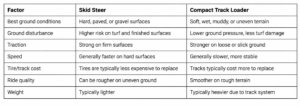
Which ground conditions favor a compact track loader?
We typically point customers toward a compact track loader when the ground is soft, wet, muddy, or uneven. The tracks distribute weight across a wider footprint, which means less sinking, less rutting, and steadier footing when the ground can’t be counted on.
For landscape and hardscape crews working residential sites, we see this matter for a different reason: tracks are generally gentler on lawns and finished grading than wheels, which helps protect the parts of a property that aren’t part of the job itself.
Which ground conditions favor a skid steer?
We recommend skid steers most often for hard, paved, or compact surfaces where flotation isn’t a concern. Their wheels typically allow for higher top speeds, and we’ve found they can be easier to maneuver quickly across a job site that’s mostly concrete, asphalt, or compacted gravel.
We also remind customers that tires are generally less expensive to replace than tracks, which is worth factoring in for contractors doing a lot of work on abrasive surfaces where tracks may wear down faster.
Does one machine offer more pushing power or traction?
In our experience, compact track loaders generally offer better traction in loose, wet, or uneven conditions because the tracks grip more surface area. That can translate to steadier pushing power when grading, clearing, or moving material on ground that would cause a wheeled machine to spin out.
On firm, dry ground, we typically see a skid steer perform just as well, and the traction gap becomes far less noticeable.
How do lift capacity and attachments compare?
We tell customers that lift capacity varies by model rather than by undercarriage type, so it’s worth comparing specific machines rather than assuming one category always lifts more. Most attachments: buckets, forks, augers, grapples, brooms are compatible with both skid steers and compact track loaders within the same size class, since the attachment mounting systems are typically shared across both.
The attachment decision usually comes down to the work itself rather than which undercarriage you’re running. If you’re regularly switching between digging, grading, material handling, and clearing, we can typically outfit either machine to handle it.
Which machine fits which job type?
Based on what we see across our customer base:
- Grading and site prep: Compact track loaders tend to hold an advantage on uneven or freshly disturbed ground.
- Land clearing: Track loaders generally perform better in wet or soft conditions common on clearing sites.
- Demolition: Skid steers can work well on hard, debris-covered surfaces where flotation matters less.
- Snow removal: We often recommend skid steers for speed and maneuverability on plowed or paved areas.
- Material handling on finished surfaces: Skid steers can reduce wear concerns tied to running tracks on concrete or asphalt.
- Residential landscaping and turf-sensitive sites: Compact track loaders are generally the safer choice to limit ground disturbance.
Should you rent one before deciding which to buy?
We always encourage customers to rent before they buy when they’re not sure which undercarriage fits their work. Running both machine types on real jobs tells you more about traction, stability, and ground impact than any spec sheet can.
We carry both skid steers and compact track loaders in our rental fleet, and our team can help match the right machine to your ground conditions and task list before you commit to a purchase.
Conclusion
There’s no universal answer to skid steer vs. compact track loader. The right choice depends on your ground conditions, the surfaces you’re working on most often, and how much you’re weighing turf protection against transport and tire costs. Compact track loaders tend to win out on soft, wet, or uneven terrain, while skid steers often make more sense on hard, paved, or debris-heavy surfaces.
At Eagle Power & Equipment, Inc., we help contractors and landscape crews work through this decision based on real jobsite conditions, not just a spec sheet. Whether you’re weighing a purchase or want to test both machine types first, our rental fleet and equipment specialists can help you land on the setup that fits how you actually work.
Frequently Asked Questions
Can a compact track loader damage a lawn less than a skid steer?
Generally, yes. Tracks spread the machine’s weight over a larger area than wheels, which typically results in less rutting and less turf disturbance on grass or finished landscaping.
Which machine holds up better on gravel or paved lots?
We usually point customers toward a skid steer for gravel, concrete, or asphalt, since wheels tend to hold up well on abrasive surfaces and tracks can wear down faster in those conditions.
Is one more fuel-efficient than the other over a full day?
Fuel efficiency depends more on the specific engine, machine weight, and workload than on wheels versus tracks. We recommend comparing fuel consumption between similarly sized models rather than judging by undercarriage type alone.
Can you switch attachments between skid steers and compact track loaders?
In most cases, yes. Attachments within the same size and mounting class are typically compatible with both machine types, though we always confirm compatibility with the specific model first.
Which is easier to transport on a trailer?
Skid steers are generally lighter than compact track loaders of a similar size, which can make them somewhat easier to trailer and haul, though we regularly transport both machine types with standard equipment trailers.
Related Articles
How Can Your Municipality Cut Through Equipment Procurement Red Tape?

Fluids and Filters: Best Practices for Maintaining Your CASE Equipment

Why the Right Equipment Dealer is Key to Your Construction Business Success

Backhoe Maintenance Tips

Even In The Middle of Winter It Is Time To Get Your Machine Set For Spring

Best Excavator Maintenance Tips to Avoid Costly Downtime
What Should Be on Your Pre-Shift Equipment Inspection Checklist?

New Service Offerings Available to Help You Keep Your Equipment in Top Shape

Preparing Heavy Equipment for Winter

