Blog
What Should You Know Before Renting Construction Equipment for a Job?
August 15, 2026Renting instead of buying gives contractors access to the machines they need without the headache of owning, storing, and maintaining every piece of equipment year-round. If you’re wondering “How do heavy equipment rentals work?”, the short version is: pick the right machine, check that it’s available, review the terms and arrange delivery or pickup. Cost depends on the equipment itself, how long you need it, and a few other factors.
Heavy equipment rentals make the most sense for short-term projects, seasonal work, or jobs that only call for a specialized machine once in a while. If you’ve typed something like “equipment in rentals work” into a search bar trying to sort this out, you’re really asking the same basic question everyone asks before signing a contract.
Before you sign anything, make sure you actually understand the equipment, the terms, who’s responsible for what, and the total cost.
How do heavy equipment rentals work?
A contractor picks the machine they need, confirms it’s available, agrees on a rental period, and reviews the terms before taking the equipment to the jobsite.
Generally, the process looks like this;
- Choose equipment based on the job.
- Check availability for the dates you need.
- Review the rate and terms.
- Arrange delivery or pickup.
- Inspect the equipment before you start using it.
- Return it according to the agreement.
The type of project usually decides which machine makes sense. Excavators, loaders, and skid steers are all built for different jobs, so pick based on what the work actually requires, not just which machine looks biggest, or most capable on paper.
Why rent construction equipment instead of buying it?
Renting makes sense when you only need a machine for a limited stretch, or you don’t use it often enough to justify owning one. Buying comes with its own baggage: storage, maintenance, insurance, and the fact that equipment loses value once you take it home.
With heavy equipment rentals, you get the machine when you need it and hand it back when you’re done. That’s especially useful for contractors juggling different kinds of work throughout the year.
Renting also lets you use newer or more specialized equipment without committing to buying it outright.
How do you choose the right machine for a construction job?
It depends on the work itself, the site, how much space you’ve got, and how much capacity you actually need. An excavator makes sense for digging. A skid steer is often the better call for material handling or tighter spaces.
Worth thinking through:
- Type of work
- Required lifting or digging capacity
- Jobsite size
- Ground conditions
- Operating height and reach
- Attachments you’ll need
- Operator experience
Pick the equipment first, before anything else. Renting the wrong machine wastes time and drives up costs fast.
What should you check before renting construction equipment?
Before you accept the machine, look it over and confirm it actually matches what you agreed to. Check the controls, tires or tracks, attachments and any visible hydraulic or mechanical parts.
Ask the rental company about operating instructions, who handles maintenance, and what to do if something goes wrong mid-job.
It also helps to confirm the rental period and return requirements before the machine ever gets to the jobsite. Sorting that out upfront saves you from surprise charges later.
How long can you rent heavy equipment?
Rental periods vary depending on the provider and the equipment itself. You might rent something for a single day, a few days, several weeks, or longer, depending on availability and what the job needs.
A short job might only need a single-day rental. A bigger project might make more sense as a weekly or monthly arrangement.
If you’re trying to figure out “how do heavy equipment rentals work?” for a longer project specifically, talk through the schedule with the rental provider before work starts. Extending a rental isn’t always guaranteed, since another customer might already have the machine reserved.
What costs should you expect when renting equipment?
The base rental rate is just one piece of the total cost. Ask about delivery, pickup, fuel, damage policies, attachments, cleaning requirements, and any other fees that might sneak in.
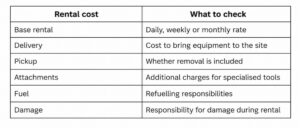
Knowing the full cost picture makes it a lot easier to compare heavy equipment rentals across different providers, whether you call it comparing quotes or just trying to figure out how equipment in rentals work before you commit to one.
Does rented equipment come with attachments?
Depends on the machine and the provider. Some equipment comes with attachments like buckets, forks, or blades already included.
Attachments can turn one machine into something useful for several different tasks, but they can also bump up the price. Ask what’s actually included before you agree to anything.
If you’ve searched something like “equipment in rentals work” trying to figure out what comes standard, the real answer is: ask the provider directly which attachments are compatible and whether they’re part of the quoted rate or billed separately.
What happens if rented equipment breaks down?
Stop using it and call the rental provider right away, following whatever the agreement says. Continuing to run a machine with a serious problem is a safety risk, and it can turn a small issue into an expensive one.
Before you rent, ask whether breakdown assistance is available and how fast they can actually get someone out to help.
At Eagle Power & Equipment, Inc., contractors can talk through their equipment needs with a team that knows construction machinery well. Understanding what kind of support is available before you commit can matter a lot once equipment becomes the thing standing between you and a finished project.
How do heavy equipment rentals work at Eagle Power & Equipment, Inc.?
It starts with figuring out exactly what the job needs, then talking through availability, terms, and project details.
The company works with contractors who need dependable machines for their projects. The right rental depends on the type of work, the site, and how long you’ll actually need the equipment.
Before committing to anything, talk the job through with the rental team and make sure both the machine and any attachments are actually right for what you’re doing.
What should you know before signing a rental agreement?
Read the agreement closely before you take the equipment anywhere. Understanding how equipment rental agreements work can help you pay attention to dates, rates, delivery arrangements, fuel requirements, damage responsibilities, and return conditions.
Also worth asking:
- What happens if the project runs longer than planned?
- Who handles mechanical problems?
- Are attachments included?
- Is delivery billed separately?
- What condition does the equipment need to be returned in?
- Are there cleaning or fuel requirements?
Really understanding “how do heavy equipment rentals work?” means knowing your responsibilities, not just the price tag.
Frequently asked questions
How do heavy equipment rentals work?
Choose the right machine, confirm it’s available, agree on a rental period, and review the terms. The equipment gets delivered or picked up, used as agreed, and returned when the rental period ends.
How much does renting heavy equipment cost?
Depends on the machine, how long you need it, and any extra services. Delivery, attachments, fuel, and damage policies can all affect the final number.
What equipment can you rent for construction work?
Common options include excavators, skid steers, loaders, and other machines built for digging, grading, lifting, and material handling. What’s available depends on the provider.
Can I rent equipment for a long-term project?
Yes, usually. Depending on availability, equipment can often be rented for days, weeks, or months. Talk through your timeline with the provider ahead of time.
Who handles repairs on rented equipment?
Depends on the agreement. Contact the provider before attempting any major repair yourself, especially if there’s a real mechanical issue involved.
Related Articles
New vs. Used Heavy Equipment: What’s Most Cost-Effective in 2025?
How To Choose the Right Mini Excavator

How to Choose a Skid Steer: What You Need To Know
Why the Right Equipment Dealer is Key to Your Construction Business Success
Rental Spotlight: CASE Brand Equipment from Eagle Power
Renting Smart: When Heavy Equipment Rental Makes Sense
Rental Spotlight: Kubota Brand Equipment from Eagle Power
Want to Start Your Own Excavation Company? Tips for Contractors
Can I Rent a Roller for Asphalt? (Models and Rental Costs)

