Blog
What Should Be on Your Pre-Shift Equipment Inspection Checklist?
April 24, 2018Unplanned equipment downtime rarely comes out of nowhere. In most cases, there was a small warning sign. A fluid level that had dropped, a hose starting to wear, a loose fitting that a quick pre-shift inspection would have caught before it turned into a mid-job breakdown. A daily equipment inspection checklist gives operators a consistent way to catch those issues early, before they cost a repair bill or a lost day on the job.
What Should A Daily Equipment Inspection Checklist Include?
A complete daily inspection checklist covers five core areas: fluid levels, undercarriage or tires, hydraulics, safety systems, and attachment connections. The goal isn’t a full mechanical teardown. It’s a quick, consistent review of what might have changed since the machine was last shut down.
Here’s the order we recommend running through it in:
| Step | What to check | What you’re looking for |
| 1. Walk-around | Frame, panels, ground beneath the machine | Fresh leaks, cracks, loose bolts, debris buildup |
| 2. Fluids | Engine oil, coolant, hydraulic fluid, fuel | Correct levels, discoloration, contamination |
| 3. Undercarriage/tires | Tracks or tires, wear patterns | Cuts, low pressure, excessive wear, embedded debris |
| 4. Hydraulics | Hoses, cylinders, fittings | Leaks, bulging, corrosion, loose connections |
| 5. Safety systems | Lights, alarms, mirrors, backup camera, seatbelt | Function and visibility |
| 6. Attachments | Pins, couplers, mounting points | Secure connection, no excess play |
What Should Happen Before The Engine Even Starts?
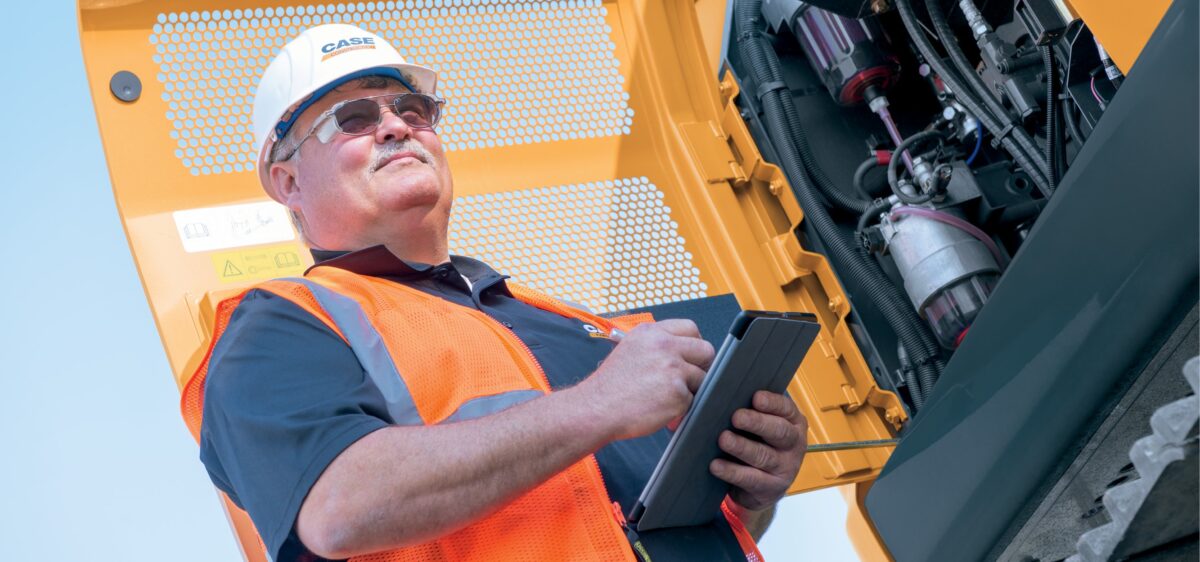
Before anyone climbs in, we recommend walking the full perimeter of the machine. The goal is to spot anything that wasn’t there the last time it ran. A fresh puddle under the engine bay, a cracked hose, debris wedged somewhere it shouldn’t be, a bolt that’s backed out. This step takes under two minutes, but it’s often the one that gets rushed or skipped under time pressure, which is exactly when it matters most.
Which Fluids Need Checking Every Day, And Which Can Wait?
We recommend a daily glance at engine oil, coolant, and hydraulic fluid. Not necessarily pulling every dipstick each time, but enough to catch a level that’s dropped or fluid that’s changed color. Fuel filters and full fluid analysis are typically scheduled maintenance items rather than something to check every day.
A fluid level that keeps dropping between checks with no obvious top-off usually points to a leak worth tracking down before it becomes a larger failure.
What Undercarriage Or Tire Issues Should Stop Work Before It Starts?
Cuts in tires, missing track links, exposed cords, or noticeably uneven wear are all reasons to hold off starting the job until someone takes a closer look. Uneven wear in particular often signals an alignment or pressure issue that gets more expensive to fix the longer it goes unaddressed.
How Do You Spot A Hydraulic Problem During A Quick Inspection?
Check hose fittings and cylinder rods for anything wet, discolored, or bulging. A hydraulic leak rarely shows up as something dramatic at first. It’s usually a small stain on a fitting or a slight bulge in a hose wall before it becomes a burst line mid-shift. Catching it during the daily walk-around is far less costly than catching it when the boom stops responding on the job.
What Counts As A Stop-Work Finding Versus Something To Log And Monitor?
Some issues can wait for scheduled service; others shouldn’t. A minor scuff or dirt buildup gets logged and monitored. A hydraulic leak, a malfunctioning safety system, exposed wiring, or a crack in a structural component means the machine should stay parked until a technician looks at it. When in doubt, treat it as a stop-work issue, a delayed repair is almost always less costly than an in-field failure that takes the whole job offline.
Who Should Be Responsible For The Daily Check, And Why Log It?
The operator running the machine that day is typically best positioned to do the inspection, since they’re the one who’ll notice if something feels different once it’s moving. Logging what was checked, even briefly, creates a record that can support a warranty claim, help trace an issue back to when it started, or provide documentation if a service history review is ever needed.
Conclusion
A daily inspection isn’t about turning every operator into a mechanic. It’s about catching small issues while they’re still small. At Eagle Power & Equipment, Inc., we help fleet and service managers build inspection habits that fit how their crews operate day to day, and our parts and service teams are ready whenever a daily check turns up something that needs a closer look.
Frequently Asked Questions
How long should a daily inspection actually take?
Once it’s routine, a proper walk-around and fluid check typically takes five to ten minutes. That’s a small time investment compared to the cost of an unplanned breakdown mid-shift.
What’s the difference between a daily check and a scheduled maintenance visit?
A daily check is a quick visual and functional review for anything that’s changed since the equipment was last used. Scheduled maintenance is a deeper service: full fluid analysis, filter changes, and component inspection, performed at set hours or time intervals.
Who’s responsible if an uninspected machine causes a jobsite incident?
That depends on company policy and insurance terms, which is exactly why documented daily inspections matter. They demonstrate that a consistent maintenance practice was in place.
Should inspection logs be kept for warranty purposes?
Yes. Manufacturers can request maintenance records when evaluating a warranty claim, and a documented daily inspection habit can make that process smoother.
What inspection items get skipped most often?
Attachment pin wear and hydraulic hose condition are two of the most commonly overlooked items, mostly because they aren’t always visible without getting close to the machine.
Related Articles

Celebrating 30 Years of Serving the Delaware Valley

Jon Pardi's California Ranch Project - Episode 5

Jon Pardi's California Ranch Project - Episode 4

Extended Warranty Options for CASE and Kubota Equipment Owners

Jon Pardi's California Ranch Project - Episode 3

Jon Pardi's California Ranch Project – Episode 2: Pushing Road Restoration to the Limits.

JON PARDI'S CALIFORNIA RANCH PROJECT

CTL Fast Track

Factory Rebates on New CASE Machines When You Trade In a Competing Brand

Section 179 Savings

