Blog
Why Are Excavator or Skid Steer Hydraulics Slow, Weak or Jerky?
November 18, 2026Slow, weak or jerky hydraulics on an excavator or skid steer may be caused by low hydraulic fluid, restricted flow, overheating, air in the system or worn components. The symptoms can look similar, but the repairs are different.
If a boom, bucket or attachment suddenly loses power, stop work and have the machine checked. Continuing to operate it may cause further damage or create a safety risk.
What do different hydraulic symptoms mean?
The way a machine responds can help narrow down the problem.
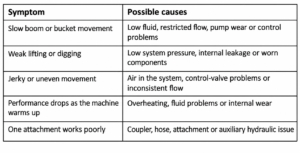
These are possible causes, not confirmed diagnoses. A technician may need to test hydraulic pressure, flow and other system functions to find the fault.
Why are the hydraulics moving slowly?
Hydraulic movements may slow down when the system cannot deliver enough fluid flow.
Common causes include:
- Low hydraulic fluid: Not enough fluid for normal operation.
- Restricted filters: Reduced fluid flow through the system.
- Worn hydraulic pump: Less flow available to operate the equipment.
- Control system problems: Valves or controls may limit movement.
Check whether all hydraulic functions are slow or only one. If several functions are affected, the problem may involve a shared system. If only one is slow, the issue may be in that circuit.
Avoid adjusting hydraulic settings to compensate for slow movement. Have the cause checked before continuing work.
What causes weak lifting or digging power?
A machine may still move normally but struggle when lifting a load or digging into the ground.
Possible causes include:
- Low hydraulic pressure
- Internal leakage in a cylinder or valve
- Pump wear
- A load that exceeds the machine’s rated capacity
Check that the task is within the machine’s operating limits.
If the machine previously handled the same work but now struggles under similar conditions, arrange a professional inspection.
Why do hydraulic movements become jerky?
Jerky hydraulic movement can happen when fluid flow becomes uneven.
Common causes include:
- Air in the system: Can cause uneven or delayed movement.
- Inconsistent fluid flow: May make the boom or bucket hesitate.
- Control valve problems: Can cause sudden or irregular movement.
If the machine moves unpredictably, stop using the affected function and arrange a professional inspection.
Why do hydraulics lose power when the machine gets hot?
Hydraulics may lose power as the machine heats up due to:
- Overheated hydraulic oil: Can reduce system performance.
- Cooling problems: Restricted airflow or a faulty cooling system may cause overheating.
- Worn components: Internal wear can affect performance as the oil gets hotter.
Check the display for temperature warnings. If the machine overheats, follow the operator’s manual and shut it down as directed. For fluid and filter maintenance, read our guide to CASE fluids and filters.
What if only one attachment is affected?
If the machine works normally but one attachment is slow or weak, the problem may be with the attachment or its hydraulic connections.
Common causes include:
- Loose or damaged connections: May affect hydraulic flow.
- Damaged hoses: Can cause leaks or restrict fluid flow.
- Incorrect hydraulic flow: The attachment may need more flow than the machine provides.
Check the attachment’s requirements and any warning messages. Never disconnect pressurized hoses or check for leaks with your hands. Read our equipment service tips for more guidance on hydraulic connections.
What can an operator safely check?
Before arranging a repair, record what happened and complete only the checks allowed by the operator’s manual.
- Check warning messages. Record any fault codes or temperature alerts.
- Look for visible damage. With the machine safely parked and shut down, inspect accessible areas for obvious leaks or damaged hoses without touching suspected leak points.
- Check fluid level. Follow the manufacturer’s procedure and temperature requirements.
- Note when the problem occurs. Does it happen when the machine is cold, after warming up or only with one attachment?
For a broader daily inspection routine, use our existing pre-shift equipment inspection checklist. Never loosen hydraulic fittings, open pressurized lines or work beneath unsupported attachments. Hydraulic repairs and pressure testing should be handled by trained personnel.
When should you arrange professional hydraulic service?
Schedule professional service if the hydraulics become slow, weak or jerky, warning lights appear, or the machine cannot operate safely.
A technician can test hydraulic pressure, flow and components to find the cause. Before calling, have the machine’s model, serial number, operating hours and fault codes ready. Explain when the problem started and which functions are affected.
Get equipment repair support from Eagle Power & Equipment
At Eagle Power & Equipment, we help contractors and fleet managers address equipment problems before they lead to longer delays.
Our heavy equipment repair services cover excavators, skid steers and other construction machines. We offer shop service and may be able to arrange on-site repairs within our service area. Contact our service team with your machine details to discuss the next step.
Related Articles

What Equipment Do You Need to Clear Land? Matching Machines to Brush, Trees and Stumps
How Well Do Kubota Excavators Hold Up on Real Construction Jobs?

Top Attachments to Consider for Your Excavator or Backhoe in 2026

Ending '24 With a Bang!

Mighty Minis: Impressive Deals on CASE CX17C and CX37C Mini-Excavators

Monster Demolition Cutters For This CASE Excavator

Use Better Digging Techniques to Get More Out of Your Excavator

CASE Power Lease

How To Get The Most Out Of Your Excavator

Backhoe or Excavator? Choosing The Right Machine For Your Project

