Blog
Trench Safety: When Do You Need Shoring, Sloping or a Trench Box
November 18, 2026Trench safety starts with protecting workers from a cave-in. Under OSHA rules, trenches 5 feet deep or more generally require a protective system unless the excavation is entirely in stable rock. Shallower trenches may also need protection if a competent person identifies a cave-in hazard.
The right method depends on soil conditions, trench depth, nearby structures and the space available. Contractors should decide how the trench will be protected before anyone enters it.
When is trench protection required?
OSHA’s excavation standards set several requirements that contractors need to plan for.
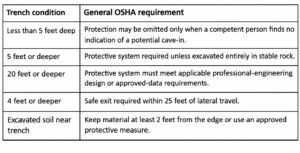
Depth alone doesn’t determine whether a trench is safe. Water, vibration, soil movement and nearby loads can create hazards even in shallower excavations.
For the full requirements, refer to OSHA’s trenching and excavation guidance.
What’s the difference between sloping, shoring and shielding?
These methods address cave-in hazards in different ways.
Sloping and benching
Sloping cuts the trench walls back at an angle to reduce the risk of collapse.
Benching creates stepped sides instead of one continuous slope. Benching isn’t permitted in Type C soil under OSHA’s standard soil-based designs.
Both methods need enough open space around the trench. The required shape depends on soil classification, depth and the applicable design requirements.
Shoring
Shoring uses supports, such as hydraulic or structural systems, to help prevent trench walls from moving. It can be useful where there isn’t enough room to slope the excavation, including work near roads or buildings. The system must be selected and installed according to applicable design requirements.
Shielding with a trench box
A trench box protects workers inside the shield if the surrounding soil collapses. Unlike shoring, it generally doesn’t prevent trench walls from moving.
Workers must stay within the protected area and be protected from cave-ins when entering or leaving the shield.
OSHA also prohibits workers from being inside a shield while it is being installed, removed or moved vertically. The shield must be used within its design limits and according to the manufacturer’s instructions.
How do soil conditions affect the protective system?
Soil classification affects the protection needed for an excavation. OSHA uses stable rock and Type A, B and C soil classifications. Type C is the least stable soil category. A competent person must assess the soil and site conditions before selecting protection.
Check for changing ground conditions
Rain, standing water and vibrations from nearby equipment can weaken trench walls and increase the risk of collapse.
A competent person must inspect the trench before each shift and as needed during work, including after heavy rain or other conditions that could increase hazards.
If the inspection reveals unsafe conditions, workers must leave the affected area until the hazards are corrected.
How should equipment be positioned near a trench?
Excavators, trucks and spoil piles can add loads near the trench edge. Keep excavated material at least 2 feet from the edge or use a suitable retaining method. Heavy equipment also needs enough setback to avoid overloading the trench wall, based on the site’s conditions.
Never allow workers beneath suspended loads, and keep personnel clear of the excavator’s operating area. For equipment movement, visibility and operator precautions, see our existing construction equipment safety tips.
What should contractors plan before digging?
Before excavation begins, the project team should confirm:
- Utility locations: Arrange required locating through 811 and identify any private lines needing separate checks.
- Protective system: Have a competent person assess the soil, depth and appropriate protection.
- Safe access: Provide required ladders, ramps or other means of exit.
- Site conditions: Account for water, nearby structures, traffic and equipment loads.
- Inspections: Assign a competent person with authority to stop work and correct hazards.
If you need guidance on excavator positioning and digging technique, our existing article on getting more out of your excavator covers those operating considerations.
Choosing excavation equipment for trenching work
Once the protective system and excavation plan are established, the crew can select equipment suited to the required digging depth, reach and working space.
Our heavy equipment rentals include excavators and mini excavators for different jobsite applications. We can help you compare available machines based on your excavation requirements.
Equipment selection doesn’t replace the need for a properly designed protective system or a competent person’s site assessment.
Discuss excavation equipment with Eagle Power & Equipment
At Eagle Power & Equipment, we help contractors find excavation equipment that fits their project requirements.
Share your planned digging depth, site access and equipment needs with us. We’ll help you compare available machines for the work. Contact our team to discuss rental options and availability.
FAQs
Can workers enter a trench before a trench box is installed?
Workers may enter only when the excavation meets the applicable OSHA requirements and the competent person has confirmed that conditions are safe. Where a protective system is required, workers must be protected before entry.
Does a trench box make an excavation safe in every soil type?
No. The shield must be appropriate for the soil conditions, trench depth and expected loads. Its use must follow the manufacturer’s instructions and applicable design limits.

